The Character of Post-War Ranch Homes in Dallas
Lake Highlands and Oak Cliff represent some of Dallas's most charming residential neighborhoods, defined by the classic post-war ranch aesthetic that emerged in the 1950s and 1960s. These single-story homes, with their clean lines, open floor plans, and modest footprints, have become increasingly desirable as homeowners seek authenticity and neighborhood character. One of the defining features of these ranch-belt communities is the prominence of wood fencing, which frames yards and provides privacy while maintaining the period-appropriate look that makes these areas so distinctive.
The wood fences found throughout these neighborhoods weren't chosen randomly. They reflect both practical needs and the architectural sensibilities of their era. A well-maintained wood fence complements the horizontal lines and natural materials typical of ranch design, creating a cohesive streetscape that has endured for decades. However, the Texas climate presents unique challenges to wood fencing. The intense summer heat, seasonal moisture fluctuations, and occasional harsh weather can degrade untreated or poorly maintained wood, leading homeowners to seek professional solutions to preserve their investment and keep their homes looking their best.
Why Wood Fencing Requires Professional Maintenance in Texas
Texas weather is notoriously unforgiving, and wood fencing bears the brunt of it. The combination of blazing summer sun, occasional heavy rains, and temperature swings can cause wood to warp, crack, and fade within just a few years if left unprotected. Unlike vinyl or aluminum alternatives, wood is a natural material that continues to age and weather. This isn't necessarily a drawback, but it does mean that homeowners who want to preserve both the appearance and structural integrity of their fences need to take proactive steps. This is where professional Wood & Privacy Fence Installation companies come in, offering not just installation but ongoing care and restoration services.
Many homeowners in Lake Highlands and Oak Cliff inherit fences from previous owners, and these older structures may have been neglected for years. Even newer fences benefit from regular maintenance. The good news is that wood fencing doesn't have to be replaced every decade. With the right care, a quality wood fence can remain attractive and functional for 15 to 20 years or more. The key is understanding the difference between cosmetic maintenance and structural preservation, and knowing when to call in professionals who understand both the challenges of the local climate and the specific needs of ranch-era homes.
Understanding Fence Staining and Fence Sealing: What's the Difference?
Homeowners often use the terms interchangeably, but fence staining and fence sealing serve different purposes and work best together as part of a comprehensive maintenance strategy. Fence sealing typically refers to applying a clear or semi-transparent protective coating that emphasizes the natural grain and color of the wood while blocking moisture penetration. A good sealer acts like a shield, preventing water from soaking into the wood fibers where it can cause rot, warping, and structural damage. Sealing is essential in Texas, where summer humidity and occasional heavy downpours create ideal conditions for wood degradation.
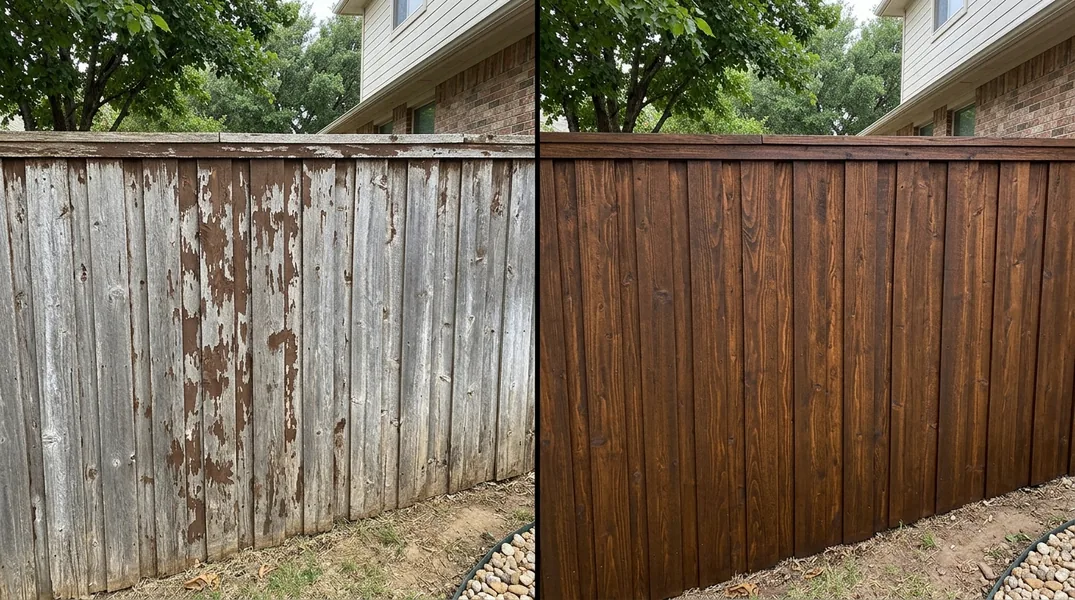
Fence staining, on the other hand, involves applying a pigmented product that not only protects the wood but also changes or enhances its color. Stains come in various shades, from light honey tones to deep browns and grays, allowing homeowners to refresh the appearance of an aging fence or match their home's exterior aesthetic. A quality stain penetrates the wood surface and provides both UV protection and moisture resistance. Many professional contractors recommend a stain with built-in sealing properties, which combines the best of both approaches. In Dallas, where fences are exposed to intense sunlight, choosing a stain with strong UV blockers is particularly important for preventing color fading and wood degradation.
Fence Staining Cost in Dallas: What to Budget
Understanding fence staining costs helps homeowners plan their maintenance budget and make informed decisions about their property. The pricing for fence staining in the Dallas area depends on several factors, including the size of the fence, the current condition of the wood, the type of stain or sealer chosen, and the complexity of the job. A linear foot approach is common in the industry, with typical costs ranging from $1.50 to $4.00 per linear foot for professional staining, depending on these variables. For a homeowner with 150 linear feet of fencing, this could mean a total investment of $225 to $600 for a complete staining project.
It's important to note that the condition of your existing fence significantly affects the final cost. A fence that has been well-maintained may only need a fresh coat of stain to restore its appearance, keeping costs on the lower end of the spectrum. However, if your fence shows signs of neglect, mold, or previous failed finishes, the contractor may need to perform pressure washing, sanding, or other preparation work before applying new stain. This preparation is essential for the longevity of the new finish and typically adds $0.50 to $1.50 per linear foot to the project cost. When evaluating quotes from contractors, always ask what preparation work is included and whether any repairs or wood replacement are necessary. Getting a free estimate from Dallas Fencing allows you to understand the full scope of work and costs before committing to the project.
Finding Reliable Fence Staining Near Me: What to Look For
When searching for fence staining services near you in Lake Highlands, Oak Cliff, or anywhere in the Dallas area, it's tempting to simply pick the lowest bid or the first contractor you find online. However, the quality of fence staining work varies significantly, and a poor application can fail within a year or two, leaving you frustrated and out of pocket. The best contractors bring experience, proper equipment, and a commitment to using quality materials. Look for companies that offer detailed consultations, explain their preparation process, and stand behind their work with warranties. A contractor who rushes through the job or skips essential preparation steps may seem cheaper upfront, but you'll likely pay more in the long run when the stain fails prematurely.
Dallas Fencing has been serving the local community with professional fence services for years, and our team understands the specific challenges that Dallas-area homeowners face. When you work with us, you get contractors who know the local climate, the types of wood that perform best in our region, and the stain products that deliver lasting results. We take time to assess your fence's current condition, recommend the best staining solution for your needs, and execute the work with attention to detail. If you're ready to restore your wood fence and protect it for years to come, we encourage you to reach out. Call us at (469) 737-9552 or visit our website to request a free estimate and learn more about our staining and sealing services.
Maintaining Your Fence After Professional Staining
Once your fence has been professionally stained and sealed, the work isn't entirely over. Proper maintenance extends the life of the finish and keeps your fence looking beautiful. In the Texas climate, where intense sun and occasional severe weather are the norm, a few simple practices can make a significant difference. Regularly inspect your fence for signs of damage, such as cracked boards, loose nails, or areas where the stain appears to be peeling. Addressing minor issues promptly prevents them from becoming major problems. Every two to three years, consider a professional cleaning to remove dirt, mold, and algae that can accumulate on the wood surface and compromise the protective finish.
Homeowners often ask whether they can simply apply a new coat of stain over an existing finish without professional help. While minor touch-ups are possible for the handy homeowner, a full restaining job requires proper surface preparation to ensure the new stain adheres correctly. Attempting to skip this step typically results in a patchy, short-lived finish. By scheduling professional maintenance every five to seven years, depending on your fence's exposure and condition, you can keep your wood fence looking fresh and well-protected throughout its lifespan. This proactive approach is far more cost-effective than waiting until your fence is severely damaged and requires major repairs or replacement. For guidance on your specific fence maintenance needs, contact Dallas Fencing at (469) 737-9552 or visit https://dallas-fencing.com to discuss a maintenance plan tailored to your property.
Looking for a professional tree service in Dallas? Dallas Fencing responds fast for all your fence needs.
Get a Free Quote