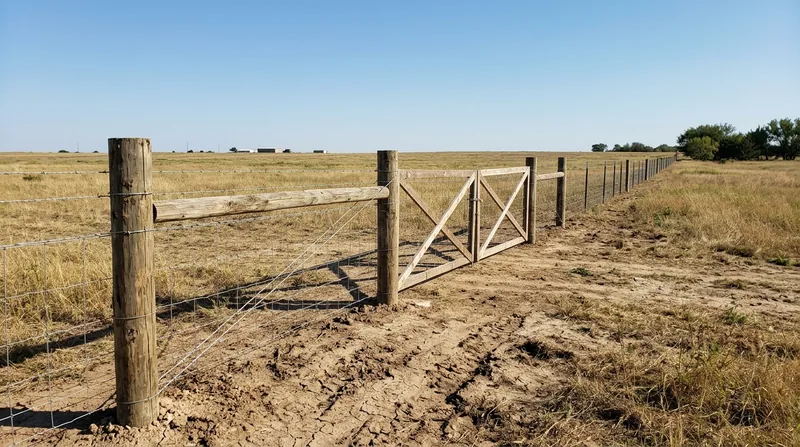




Farm fence installation in Dallas requires more than standard residential fencing experience. The ground here is Houston Black clay, which swells in wet months and shrinks in dry heat, heaving fence posts and racking panels across seasons. On acreage outside Dallas and across the greater metro area, pasture fencing must handle open prairie exposure, livestock pressure, and terrain that shifts underfoot. We set line posts deep in concrete, space them to code for the wire or rail type you choose, and build fences that stay plumb and functional through the wet-then-dry cycle that breaks most farm installations.
Ranch and pasture fencing is a different trade from residential privacy fence. Posts carry different loads, wire gauges matter for the animals you're containing, and the setback from property lines follows different rules on acreage than it does in subdivisions. We work from your existing survey, locate utilities with a Texas 811 call before we dig, and size every component for the climate and soil conditions that define the Dallas area.
Why Farm and Ranch Fencing Matters in Dallas
Acreage outside Dallas sits on soil that moves. Spring rains swell the clay; summer heat shrinks it. A fence post set in tamped earth will heave and lean within two seasons. Posts set in concrete below the frost line, even in a climate that rarely freezes, stay plumb because they anchor below the active soil layer. Wire fencing for pasture has to hold livestock without sagging between posts, and the gauge and mesh size determine what animals you can safely contain.
- Posts set in concrete resist heave from clay soil expansion and contraction across seasons.
- Line post spacing and wire gauge are sized for the type and size of livestock you are containing.
- Split rail, pipe, or wire fencing each handle different terrain and animal types on Dallas acreage.
- Pasture fencing on prairie ground requires different bracing and tension than residential fence.
- Property setbacks and boundary compliance on acreage differ from subdivision rules and HOA standards.
Proper farm fencing holds animals safely, marks boundaries clearly, and survives the seasonal ground movement that racks poorly installed fence.
Key info: Dallas-area acreage is often subject to county rather than city building codes. Setbacks, height limits, and material restrictions vary by jurisdiction. We confirm requirements with your local county extension office or building department before we start. Check the Dallas County assessor and building resources if your property is outside city limits.
How We Install Farm and Ranch Fencing in Dallas
Farm fencing starts with a site walk and a conversation about what you are containing, how many acres, and what the ground looks like. We locate utilities with a Texas 811 call, mark the line you want to fence, and then set posts. Every post goes into a hole dug below the active soil layer, seated in concrete, and backfilled. We space posts to code for the wire or rail type, install tension bands and stretcher bars for wire fencing, and brace gates to prevent sag. The result is a fence that holds its line and stays functional through years of wet and dry cycles.
- We schedule a Texas 811 utility locate call before any post hole is dug to identify buried electric, gas, and water lines.
- Posts are set in concrete below the active soil layer to resist heave from clay expansion and contraction.
- Line post spacing is calculated for the wire gauge and livestock type you are containing.
- Wire fencing is tensioned with stretcher bars and tension bands to prevent sagging between posts.
- Gates are installed with anti-sag bracing and self-closing hardware if you choose it.
- We walk the completed fence with you to confirm it meets your boundary and animal containment needs.
The process takes longer than residential fence because acreage fencing is built to hold under load and survive ground movement. That extra care is what keeps your pasture secure year after year.
Example: A 10-acre property in Grand Prairie with a 4-strand barbed wire pasture fence typically requires posts every 8 feet, concrete footings 36 inches deep, and tension bands at the corners and gates. A job of that scope takes 5 to 7 working days depending on terrain and soil compaction. We handle the 811 call, the digging, and the tension setup so you do not have to.
Farm and Ranch Fencing Methods for Dallas Acreage
| Fencing Type | Description | Best for |
|---|---|---|
| Split Rail | Horizontal rails mortised into posts, typically 2 or 3 rails high, pressure-treated pine or cedar. | Decorative pasture boundaries, small horse enclosures, acreage with aesthetic appeal. |
| No-Climb Horse Fence | Wire mesh fencing with 2 by 4 inch openings mounted on wood posts, highly visible and safe for equine. | Horse pastures, paddocks, areas where visibility and safety are priorities. |
| Pipe Fence | Steel pipe posts and rails, galvanized or powder-coated, set in concrete, extremely durable. | High-traffic areas, livestock containment, long-term pasture fencing on expansive clay soil. |
| Barbed Wire | 4 to 5 strand barbed wire on wood or pipe posts, tensioned with stretcher bars, classic pasture fencing. | Cattle ranches, large acreage, cost-effective perimeter fencing on open prairie ground. |
| Woven Wire | Welded or woven mesh, typically 4 or 6 feet high, mounted on posts with tension bands. | Livestock containment, wildlife exclusion, areas where small animals must be prevented from escape. |
Each method handles Dallas clay differently. Split rail and woven wire work well on acreage with moderate slopes; pipe fence excels on exposed prairie where wind and animal pressure are constant; barbed wire is the most economical for large perimeter fencing. We recommend the right type based on your terrain, animals, and long-term goals.
Farm and Ranch Fencing Cost in Dallas: What to Expect
Farm fencing in the Dallas area starts at $11 per linear foot for basic split rail or woven wire on standard post spacing. Barbed wire pasture fencing runs slightly less; pipe fence and no-climb horse fence run higher because the materials and labor are more substantial. A 1-mile perimeter on flat acreage with standard post spacing, tension bands, and gates can range from $5,000 to $15,000 depending on the type you choose and site conditions.
Factors that move the cost up include uneven terrain requiring stepped or racked installation, rocky soil that slows post hole digging, limited access requiring hand tools instead of power equipment, and the need for additional bracing or reinforcement in high-wind areas. Corner posts and gate posts carry extra labor because they require cross-bracing and deeper concrete footings. Utility locates, permit fees if your county requires them, and any existing fence removal add to the total.
The best way to understand your actual cost is to get estimates from two or three contractors who have walked your property and seen the soil, slope, and access. Visit our pricing page for a detailed breakdown by fence type, and call us at (469) 737-9552 for a free on-site estimate. We respond within 24 hours and can often schedule a walk within a few days.
Farm and Ranch Fencing Near Me: What Dallas Homeowners Should Know Before Hiring
Hiring the right contractor for farm fencing means checking three things: insurance, references, and understanding how fencing is regulated in your jurisdiction. Texas issues no state license for fence installation, so licensing is set county by county and varies across the greater Dallas area. Always verify permit requirements with your local county building department or extension office before you start. We are fully insured with general liability and workers' compensation coverage, and we can provide a certificate of insurance on request.
Ask any contractor for references from recent farm or ranch fencing jobs in your area, and call at least two. Ask how they handle Texas 811 utility locates, whether they set posts in concrete or tamped earth, and how they brace gates. Check that their estimate includes the 811 call, post concrete, tension bands, and any gates you need. Get everything in writing before work starts.
If your property is in a county-managed area outside Dallas proper, confirm whether a permit is required and whether there are deed restrictions on height, material, or setback. Some acreage is subject to agricultural easements or conservation agreements that limit what you can install. We work from your existing survey and install on the line you identify. If you need a boundary determination, a licensed land surveyor is the only person who can provide that. Contact us at dallas-fencing.com/contact or call (469) 737-9552 to discuss your property and get a free estimate.
Farm & Ranch Fencing in Dallas: Pricing Guide
| Service | Price | Details |
|---|---|---|
| Split Rail Fence | Starting at $11/ft | Pressure-treated 2 or 3 rail fence on wood posts, concrete set, includes standard 8-foot post spacing |
| Barbed Wire Pasture Fence | Starting at $9/ft | 4 to 5 strand barbed wire on wood or pipe posts, tensioned with stretcher bars, most economical option |
| No-Climb Horse Fence | Starting at $16/ft | Wire mesh on wood posts, highly visible and safe for equine, includes corner bracing and gate posts |
| Pipe Fence | Starting at $18/ft | Galvanized or powder-coated steel pipe posts and rails, set in concrete, most durable for high-traffic areas |
| Large acreage or complex terrain | On estimate | Sloped ground, rocky soil, limited access, or mixed fencing types require on-site evaluation for accurate pricing |
| Free estimate and 24-hour response | No obligation | Call (469) 737-9552 for a walk-through and written estimate within one business day |
Indicative pricing, the exact cost depends on square footage, finish, and site access. Free personalized estimate within 24h at (469) 737-9552.


